How to Become a Sound Bath Practitioner
It takes a few instruments, a great many hours of practice, some training, and the slow skill of holding a room full of people.

What a Sound Bath Practitioner Does
“A sound practitioner holds space with sound, for a room of people or for one person at a time.”
Hamid Jabbar
For a group, a practitioner leads a sound bath from the first words to the last sound. For one person, the practitioner sits with them through a private session.
People in the room lie down or sit. The practitioner tells them what is about to happen and roughly how it will go, and then the sound begins, building and settling while they listen.
What each of them does with that hour is theirs. The practitioner's part is the conditions: a room that is ready, sound that is paced, silence used as a tool, and an ending that brings everyone back without a jolt.
The Word People Search
Many people type “how to become a sound healer” or “sound healing practitioner” when they start looking. GongSpace says practitioner. A healer is someone who does something to another person, and in a sound bath the work belongs to the people lying on the floor. The practitioner holds the room for them.
What You Need
Hours With the Instruments
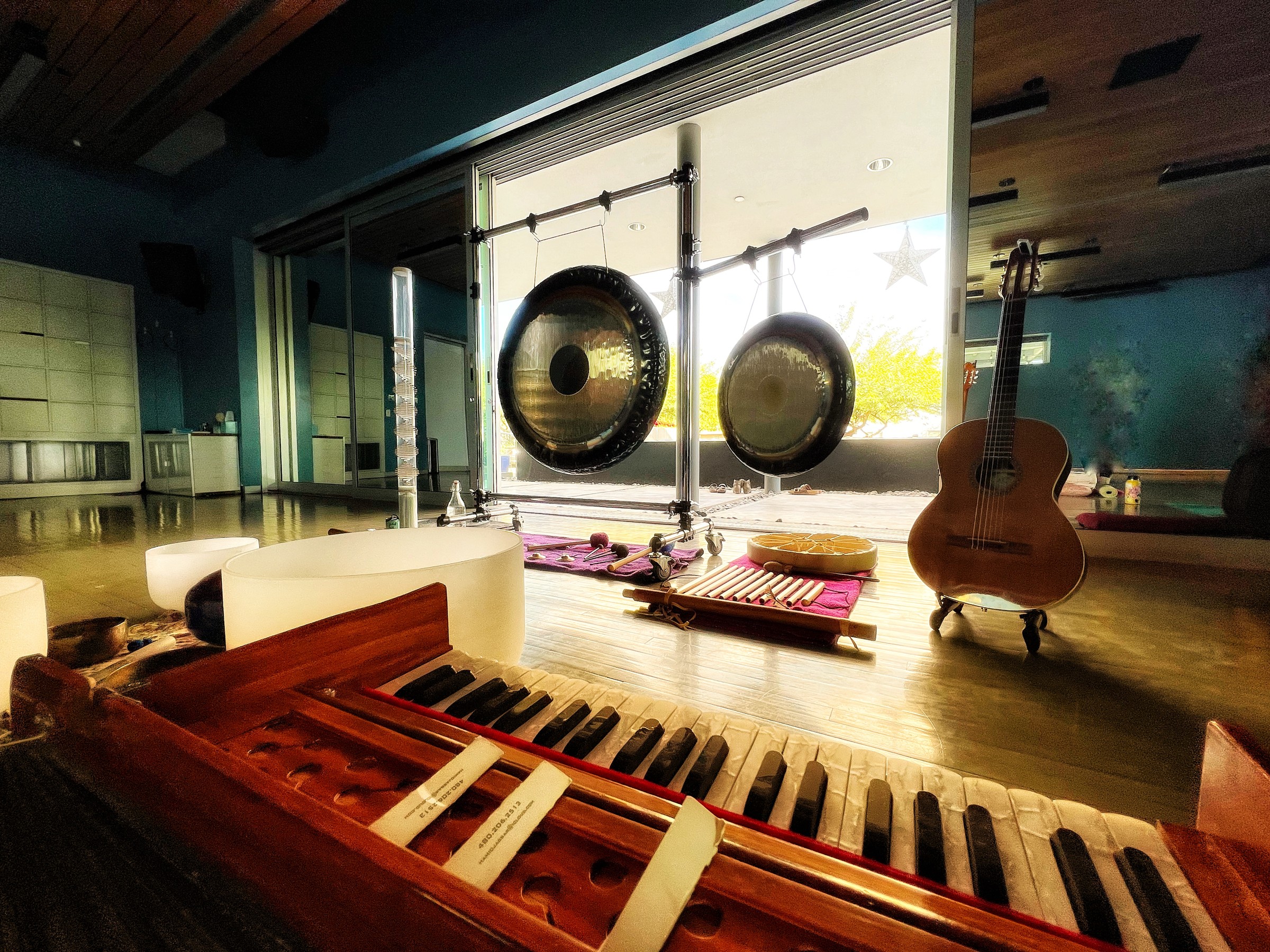
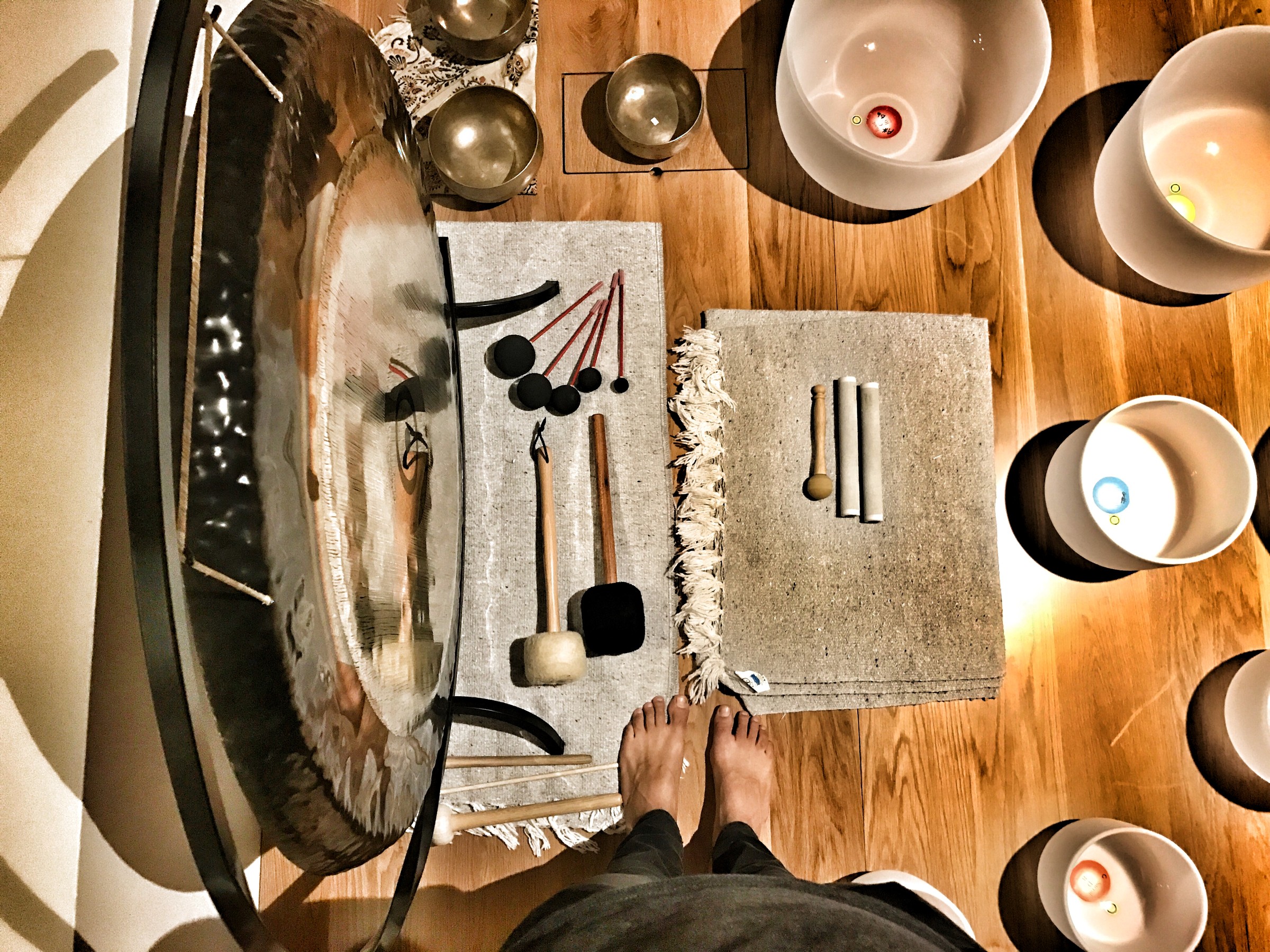
Becoming a practitioner is mostly practice. You learn what a gong does when it is struck softly and when it is rubbed with a friction mallet, how two bowls sound together, and how long a sound takes to die away in the room you have.
Hamid's in-person Level I runs in a set order: the history and theory of sound, then harmonics and overtones, then many hours with each instrument in turn. A training can give you that order. Only practice gives you the hands.
A Few Instruments
One instrument is enough to begin. Hamid's own course gives each instrument its own lesson, the voice included, and advises buying one and adding the others over time. Which to buy first is in the guide to sound bath instruments.
Musicians and Everyone Else
You can start without reading music, singing well or any musical background. A gong has no notes to read and no beats to count.
The Skill of Holding a Room
This part takes longest. It means reading what a group needs, pacing the sound so it builds and settles without a crash, and ending so that people come back gently. Silence is a powerful tool too, and where to use it is a matter of preference.
“By Level II the technique is mostly there. What is left is knowing when not to play, and that is the part that separates a session that lands from a session that is merely loud.”
Hamid Jabbar
Technique comes within a few sessions. Judgment comes slowly, and only from leading rooms: knowing when to strike and when to wait.
Some Training
A training saves you from finding all of this out alone. It gives you an order to learn in, a teacher who has led many rooms, demonstrations of real sessions and, in person, someone listening while you play.
What a Training Gives You, and What a Certificate Is
From a Training
A full training covers the theory a practitioner uses, every instrument in turn, and how to run a session for a group and for one person. It also gives you time with instruments you may not own yet.
The better ones also teach what to call the work and what a practitioner can honestly say about it. Hamid's in-person Level I gives part of its time to talking about the work without overclaiming what it does.
From a Certificate
A record, issued by the school, that you finished its course and, at some schools, passed its assessment. It helps when a studio or a venue asks for documentation, which is why Hamid's trainings give one.
The skill to hold a room lives in the hours behind the certificate. Yoga teachers registered with Yoga Alliance can count a course's continuing education hours toward that registration, and Hamid's own course carries 20 of them. How every school describes its certificate is in the comparison of trainings.
How Long It Takes to Be Ready
Training hours are the easy part to count. The online trainings in the comparison run from 20 hours to about 200, and the readiness comes after them.
Learning
Hamid's own online course is over 20 hours of video, taken at your own pace. It can be done in a weekend or spread over a year, and access has no end date.
In the Room
His Level I training is in person: 32 hours across two weekends in a small group, with every instrument provided. By the end, each student has run sessions for the group and for one person.
Leading
Then the long part: lead sound baths for real people, notice what worked, and change what did not. Most of what you learn after a first training comes from this.
The 200 hours many guides mention come from ISTA, an association whose list of approved schools asks for 100 or 200 hours. You are ready when you can lead a whole sound bath alone, from the opening words to bringing people back, and know what to do when the room goes differently than planned.
How People Lead Their First Sound Baths
Yoga and meditation teachers bring sound into classes they already teach, and Hamid's trainings give part of their time to how sound fits such a class.
Bodyworkers add sound to the sessions they already give.
Lead a few sound baths for friends in a living room, to practice the opening, the pacing and the ending before strangers are there. The guide to leading a sound bath sets out how one is built.
In Hamid's in-person Level I, a student's first sessions are run in a room of people learning the same thing. His Level II asks each student to design a practicum, and for some it is an offering of their own that uses sound.
Questions About Becoming a Practitioner
The prices and hours of nine online trainings, Hamid's own course among them, sit side by side in the comparison.
How long does it take to become a sound bath practitioner?
The training can take a weekend or a year: Hamid's own online course is over 20 hours at your own pace, and his in-person Level I is 32 hours across two weekends. Being ready to lead a room alone takes longer, and comes from leading sound baths and learning from each.
What does a sound bath certificate give you?
A record from the school that you finished its course, and at some schools passed its assessment. It answers a studio or a venue that asks for documentation, and a yoga teacher registered with Yoga Alliance can count a course's continuing education hours toward that registration.
Do I need to be a musician?
No. Reading music and singing well are not needed for Hamid's own course, and you can start without any musical background. The gong in particular asks for nothing to read.
What instruments do I need to start?
One instrument is enough to begin, and the others can come over time. The guide to sound bath instruments covers what to buy first.
Can I lead sound baths for one person as well as for a group?
Yes. Both are part of the work, and Hamid's trainings teach a session for one person alongside a sound bath for a group.
The GongSpace list
Join the List and Take $29.80 off Hamid's Own Course: $268.20 Instead of $298.
The code is shown at once and emailed to you, by Hamid Jabbar PLC, which owns GongSpace.