Sound Bath, Sound Healing, Gong Bath: What the Names Mean
Five names for overlapping kinds of work with live instruments, each carrying a different promise. Americans search one of them far more than the rest.

Which Name Americans Search
Sound bath, by a wide margin. On Bing, in the six months from April 12 to October 9, 2026, people in the United States searched for sound bath 5,108 times. Sound healing drew 848 searches, about a sixth as many.
Sound therapy drew 1,025, more than sound healing, and sound bath meditation 959. Gong bath drew 58 and sound meditation 20.
Google Trends shows the same over a longer stretch. In the five years to October 12, 2026, US interest in gong bath averaged 0.5 against 42.7 for sound bath. Of the suggestions Google and Bing share for gong bath followed by a letter, 26 are places, and 22 of those are in Britain.
Sound bath leads the training searches too. Over the twelve months to October 12, 2026, US Trends scored sound bath training at 10.3, sound healing training at 6.9, sound healing certification at 5.7 and sound bath certification at 1.2. Trends numbers show relative interest, and most weeks for these searches read zero, so the order counts for more than the sizes.
The Bing figures are exact US searches from Bing Webmaster Tools' keyword research, read October 12, 2026. The Trends figures were read the same day.
sound bath5,108 searches
sound therapy1,025 searches
sound bath meditation959 searches
sound healing848 searches
gong bath58 searches
sound meditation20 searches
What Each Name Means
Sound Bath
The name Americans search most. People sit or lie still, most often with their eyes closed, while instruments are played live, usually gongs with singing bowls.
Event planners often use it when they book sessions for companies.
The word pictures sound washing over someone lying still, and people who have never been to one can find the name puzzling:
“Somebody I know saw sound bath on a resort spa schedule and did not go, because she did not own a swimsuit. Nobody needs a swimsuit.”
Hamid Jabbar, Red flags in sound healing
Sound Healing
The field's broadest name, and the one many schools put on their trainings and certificates. It covers the same kinds of sessions as sound bath and adds the promise of healing.
Americans search it about a sixth as often as sound bath. Some teachers keep away from it.
Gong Bath
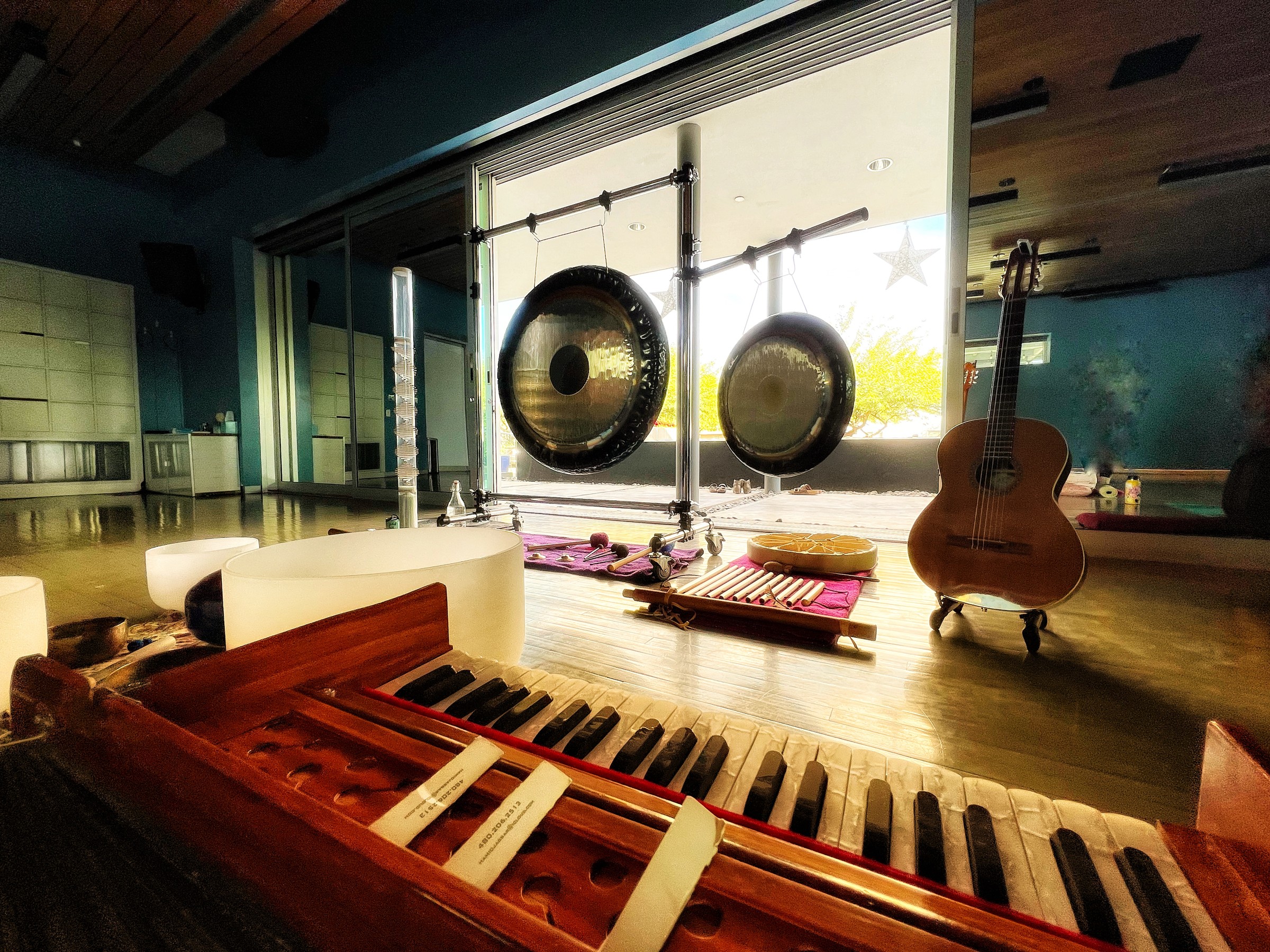
A sound bath built around gongs. The name is mostly British, and rare in the United States, where Bing counted 58 searches in six months.
Sound Meditation
The name almost nobody searches: Bing counted 20 in the same six months.
It names something the listener does. Sound is what the meditation rests on, and the person meditating is the one on the mat. Gong meditation works the same way:
“Descriptive and true. It names the instrument, it names the activity, and the activity belongs to the person doing it.”
Hamid Jabbar, Red flags in sound healing
Sound Therapy
Therapy is a clinical word, and of the five names this one sits closest to medicine. It is a common search too: Bing counted 1,025 in the same six months, more than for sound healing.
Hamid's own course uses the word. It teaches the science and practice of sound as used in meditation and sound therapy, and gives sound therapy a lesson of its own, with a full session demonstrated.
Why Some Teachers Keep Away From the Word Healing
The clearest version of the case against it comes from Alexandre Tannous, and it turns on what the word sets up between two people:
“Healing in this sense comes out of Western medicine, and Western medicine divides a room into two people. One of them has the training and the equipment. The other one has the problem.”
Hamid Jabbar, Red flags in sound healing
In that arrangement one person does something and the other receives it. In a sound bath it runs the other way: the person listening is the one doing the work.
When you compare trainings, look for one that talks about the word:
“I would not want a training to ban the phrase. I would want it to spend at least ten minutes discussing why the term is problematic.”
Hamid Jabbar
GongSpace uses sound healing as the name of the field, since it is the one people know and search, and gives these reasons beside it.
“Nothing in that room heals anybody. The instruments hold your attention still for long enough that you can do something you already knew how to do.”
Hamid Jabbar
Why GongSpace Says Practitioner
People also search for how to become a “sound healer”. GongSpace says practitioner instead. A practitioner is someone who practices: the word describes what the person with the instruments does, and leaves the listening to the people lying down.
“A sound practitioner holds space with sound, for a room of people or for one person at a time.”
Hamid Jabbar
Holding space is the work around the playing, from setting the room to the last silence. The guide to leading a sound bath follows it step by step, and how to become a sound bath practitioner follows the path to doing it for others.
The Names in Hamid's Own Course
The Sound Practitioner Training (Hamid's own course) spends time on the names in this field, from sound healing to gong bath. Its page says why the course carries the name it does.
It is online and self-paced: 14 modules and 31 lessons, $298 paid once, with 20 hours of Yoga Alliance continuing education.
See the courseQuestions About the Names
What is the difference between a sound bath and sound healing?
Sessions under either name can look alike: people lie or sit still while instruments are played live. Sound bath describes the experience in the room. Sound healing adds a promise about the outcome, and some teachers do not use it for that reason.
Is a gong bath the same as a sound bath?
A gong bath is a sound bath built around gongs, and the name is mostly British. In US Google Trends over the five years to October 12, 2026, gong bath averaged 0.5 against 42.7 for sound bath.
Which name do Americans search most?
Sound bath, by far. From April 12 to October 9, 2026, Bing counted 5,108 US searches for sound bath. Sound healing had 848 and sound meditation had 20.
Which name describes what the listener does?
Sound meditation. It names something the listener does, and the person meditating is the one on the mat. Gong meditation works the same way, naming the instrument and the activity.
Why do some teachers avoid the word healing?
Because it casts the practitioner as the one doing something and the listener as the one receiving it. In a sound bath the listener does the work, and the instruments hold their attention while they do it.
The GongSpace list
Join the List and Take $29.80 off Hamid's Own Course: $268.20 Instead of $298.
The code is shown at once and emailed to you, by Hamid Jabbar PLC, which owns GongSpace.