Sound Bath Instruments, and What to Buy First
Begin with one instrument you have heard and can play, and your voice. Add the rest once you know what a room needs.
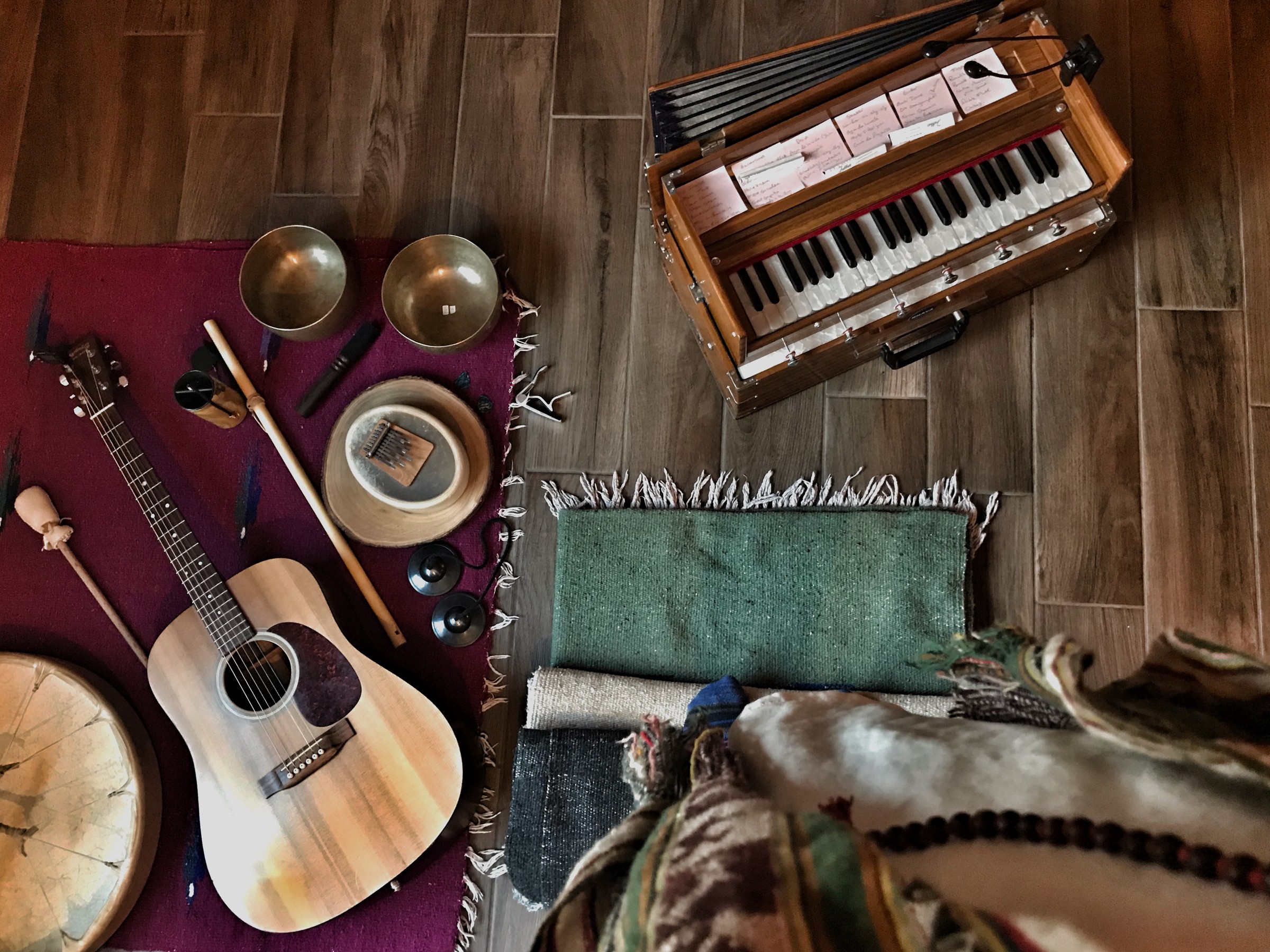
Begin With One Instrument
Hamid's own course teaches more than a dozen instruments, and you need only one to start. A new player cannot yet hear what separates a good bowl from a poor one, and plenty of poor metal and crystal is sold to exactly that buyer. Time with one instrument changes what you can hear.
A bowl gives up its first note within minutes, and the long part of the work can be learned on one instrument.
“What takes time is knowing what a room needs, and being willing to leave silence in it.”
Hamid Jabbar
A Small Kit for a First Sound Bath
Collect these five in this order. The first costs nothing.
Your Voice
It goes wherever you do. Hamid's own course teaches chanting and toning, with overtone singing as a lesson of its own, and its first lesson is on the voice, for people who think they cannot sing.
One Bowl You Have Heard, Then a Second
Bowls are the kindest instrument to begin on: a crystal bowl sounds beautiful on the first afternoon. Buy one you have played, or one chosen by someone who has.
A second bowl gives you a drone and a line over it: keep a low bowl singing quietly under a rubber mallet with one hand, and play the other over it with the second. Crystal or Himalayan singing bowls covers which kind to buy.
A Frame Drum
It is the shortest way in for anyone who thinks they are not musical. Hamid's own course teaches it for shamanic drumming and for meditation, with hand techniques and rhythms.
A Shruti Box, When the Voice Becomes Your Instrument
A shruti box is a small bellows over a set of reeds that holds a drone for as long as you pump it. Use it, or a harmonium, under a session, and sing a long note over it to hear the harmonics it builds.
A Gong, Once You Have Played One
A gong comes with a stand and mallets to choose as well, so it is the one purchase most worth trying before you buy.
Choosing a first gong covers what to buy with it, and How to play a gong the playing.
What Each Instrument Brings to a Sound Bath
In a sound bath people lie down and listen while the sound rises and settles, and each instrument has its own part.
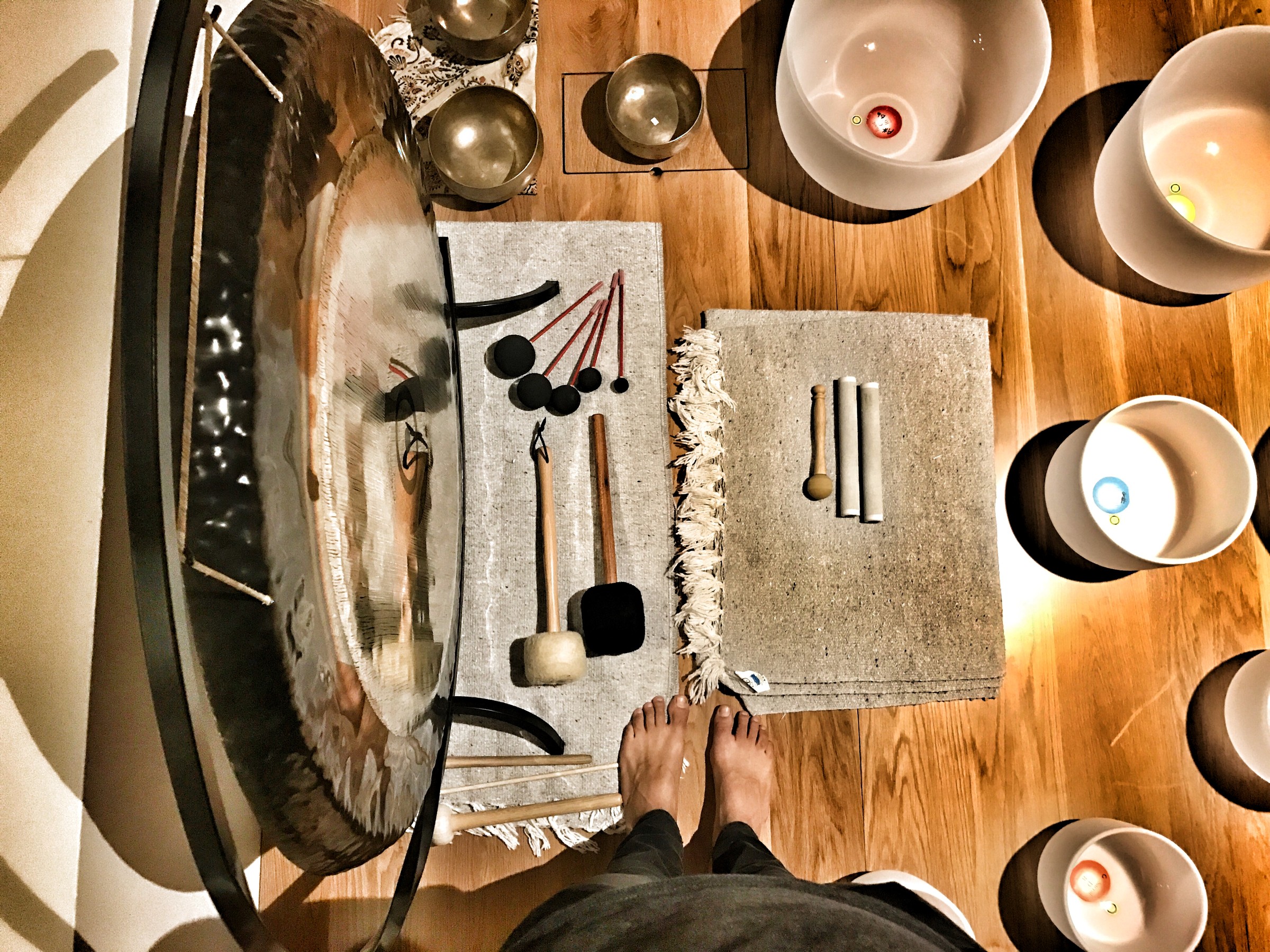
Gong
Struck near the center, a gong gives a root note, and as the vibration spreads across the metal, overtones keep rising out of it, often called a wall of sound.
Himalayan Bowls
Like the gong, their sound comes from overtones more than from a single note. Sung around the rim, a bowl gives a low note, and struck, a higher ring.
Crystal Bowls
Each is sold as one named note. Large frosted bowls are the loudest, and sung, they hold a session's low end. Clear bowls are quieter and ring on long after the mallet leaves.
Shruti Box and Harmonium
They hold the drone. Indian classical music keeps one unchanging note under everything, and these two give the voice, a flute or a bowl something steady to sit on.
Frame Drum
It brings a steady beat into a session otherwise made of long tones.
Native American Style Flute
It plays a line of melody over a drone. Treat it as a breathing practice as much as a playing one.
The Atmospheric Instruments
Chimes add a shimmer, and a rain stick and an ocean drum the sound of rain and surf. The page for Hamid's own course counts those two among the atmospheric instruments.
Voice
Sung alone or over a drone, from plain chanting to overtone singing. It is the one instrument everyone in the room also has.
What Can Wait
“Two bowls you love will do more in a room than a full set you settled for, and the money is far better spent on one instrument that holds a note.”
Hamid Jabbar
A Set of Seven Chakra Bowls
Crystal bowls are often sold seven at a time in C major, one note for each chakra. That chart is recent: the chakra systems are old, but the equal tempered scale that makes a note a C has been in general use for about a century. Trust the sound of a bowl over the sticker on it.
Gemstone Bowls
Sold as alchemy bowls, they are quartz with color added, and sound close to a plain bowl of the same size, a little earthier. Much of the price pays for how they look, a fine reason to buy one later.
A Loop Pedal
A loop plays a recorded phrase back on a fixed cycle. A listener can guess what comes next, and the guessing keeps part of their attention busy. Played by hand, no two strokes come out the same.
Instruments for the Photograph
A sound bath is heard with the eyes closed, so how an instrument looks stops mattering within the first minutes. Spend on what you can hear.
A Didgeridoo
It takes longer than most instruments to get a first sound out of, so leave it until you are at home with the others.
How to Buy an Instrument
Hear the One You Are Buying
Two bowls can look alike in a photograph and sound nothing alike, and even a recording cannot tell you how a bowl will fill your room. Play the bowl itself before you pay if you can, or buy from someone who has played that exact bowl and will tell you honestly how it sounds.
Listen for how long it rings and how still it sits. Sing it, take the mallet away, and count how long the note keeps ringing. Strike it softly and listen above the main note for overtones that hold steady. Last, play it beside something you already own.
New or Used
Test a used bowl the same way, by ear. One bought from a person may be one you can play before you pay. Check a used crystal bowl for chips and cracks, since a crack in quartz cannot be repaired.
Mallets
Frosted crystal bowls usually come with a mallet and a rubber ring to sit on. On a rough frosted bowl a suede mallet drags and squeaks around the rim, so use rubber there. Suede usually sounds better on clear bowls and smooth frosted ones. Gongs take their own mallets, from soft beaters to friction mallets.
Cases
Crystal breaks, so a crystal bowl that travels needs a padded case, and a set can travel nested, each bowl in its own sleeve. A small metal bowl packs into a bag.
A Rug, and a Ring Under Each Bowl
Lay the instruments out on a rug within reach of where you sit. A crystal bowl rests on its rubber ring and a metal bowl on a ring cushion, which keeps each from sliding or buzzing against the floor.
432 Hz or 440 Hz
The number is the pitch of a single note, the A above middle C, and every other note is tuned from it.
440 Hz is the international standard, set out as ISO 16, and most Western instruments are tuned to it. Crystal bowls are also sold at 432 Hz, which lowers that A and every note with it by a little under a third of a semitone, leaving the spaces between notes the same.
There is a bigger question in tuning than where the A sits. The equal tempered scale moves each note a little off its natural harmonic ratio so that one instrument can play in every key, and sound meditation favors natural harmonic intervals. Moving A from 440 to 432 leaves that compromise where it was.
Sellers make many claims for what 432 Hz does to a listener. What decides a purchase is what the bowl will be played with.
Match What It Will Sound With
A crystal bowl keeps the pitch it was made at for good. A guitar can be retuned and a voice finds the note, but two bowls a third of a semitone apart beat against each other whenever they ring together. So ask the seller which tuning a bowl is, and match it to what you already play. With nothing yet, 440 is the pitch most other instruments share.
Should I buy 432 Hz or 440 Hz singing bowls?
The tuning that matches the instruments it will be played with, since a bowl cannot be retuned. With nothing yet, 440 Hz is the standard most other instruments share.
Questions People Ask About Sound Bath Instruments
What instruments are used in a sound bath?
Gongs and singing bowls most of all, crystal and Himalayan, with a drone from a shruti box or harmonium, a frame drum, a flute, chimes, a rain stick or an ocean drum, and the voice.
Do I need a gong to lead a sound bath?
No. A session played on bowls alone is a real session. A gong also needs a stand and mallets, so play one before you buy one.
How many singing bowls do I need to start?
One you have played, then a second once you know what the first one needs beside it. With two, one bowl can hold a low drone while the other plays over it.
The GongSpace list
Join the List and Take $29.80 off Hamid's Own Course: $268.20 Instead of $298.
The code is shown at once and emailed to you, by Hamid Jabbar PLC, which owns GongSpace.